
Knock Out
Combo GamePuzzle
4.71.54K Reviews
- Version
- 2.5.0
- Installs
- 1.00M
- Age Rating
- Everyone
Screenshots
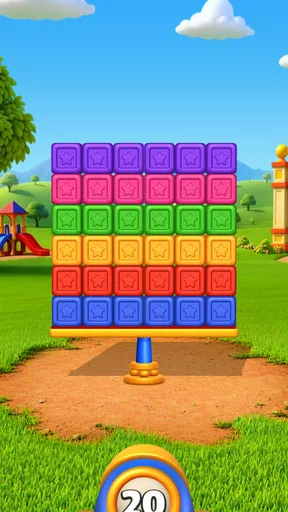
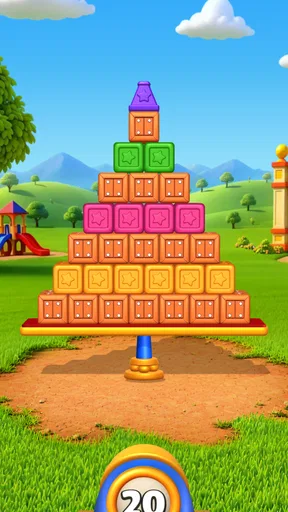
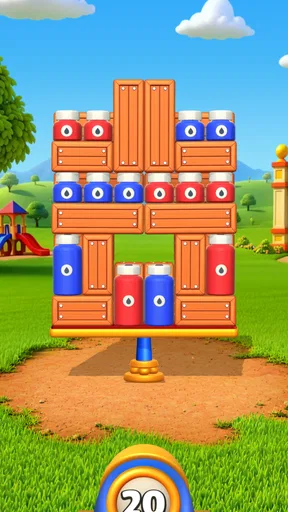
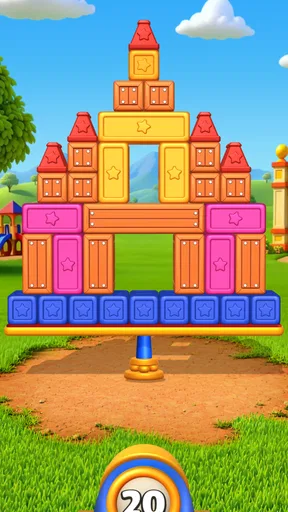
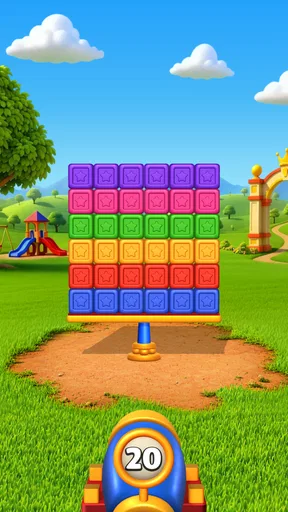
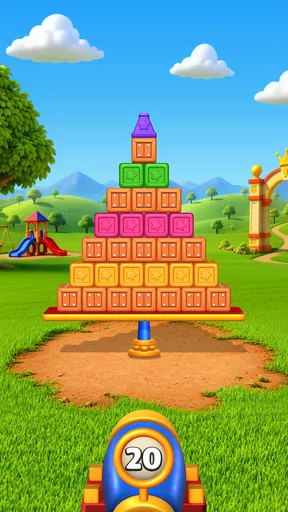
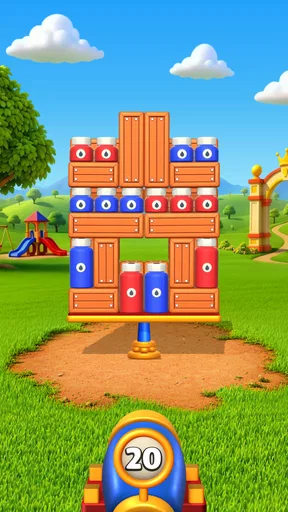
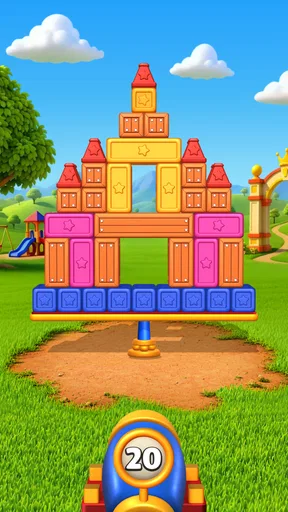
Our Review of Knock Out
 Analysis by Appyee
Knock Out is a free puzzle game from Combo Game that focuses on a simple promise: clear blocks, make useful decisions, and keep the board under control. I found the appeal easy to understand within the first few rounds. It does not ask me to learn a complicated story or manage a large collection of systems before the puzzle becomes enjoyable. The central satisfaction comes from looking at the available pieces, spotting a practical move, and watching the board open up after a successful clear.
That simplicity is also the game’s main test. A block puzzle can feel relaxing when the board gives me room to think, but it can become tense when one poor placement limits every later option. Knock Out works best when I treat it as a short decision-making game rather than something to rush through. Its store summary calls it a fun block game, while the short description uses the phrase “Knock Out”; in practice, I would describe it as a compact puzzle experience built around planning space and accepting that not every move will be perfect.
I reviewed it as the kind of game I might open while waiting for an appointment, taking a break from work, or winding down without committing to a long session. The game is free to start, rated for Everyone, and has reached over 500 thousand installs. Its average rating is 4.7 from around 6 thousand ratings, which fits my impression that the straightforward format is easy for many players to pick up. Still, popularity does not remove the need to understand its pacing and its limits.
How the first goals create a reason to keep playing
The early goal in Knock Out is not a complicated checklist. It is learning to make each placement count. At first, I naturally wanted to clear blocks as quickly as possible, especially when an obvious move was available. That approach works while the board has plenty of open space, but the game becomes more interesting when I start asking a second question: what will this move leave behind?
That small shift gives the opening rounds more value than the basic “place and clear” loop might suggest. A move can be successful immediately and still create an awkward gap for the next piece. Conversely, a less dramatic placement can preserve several possible lines and give me more flexibility later. For a casual player, this creates a gentle early objective: stop reacting to the current shape and begin preparing for the next one.
I recommend playing the first sessions slowly instead of trying to prove how quickly a board can be cleared. The useful habit is to scan the full board before committing. Look for the tightest spaces first, then consider whether a move can remove a troublesome area without sealing off a larger region. This is one of the game’s less obvious strengths: the basic rules encourage spatial awareness without needing a tutorial full of instructions.
The early experience is particularly suitable for people who enjoy familiar puzzle ideas but do not want a demanding strategy game. Younger players can understand the visible objective, and adults can use the same loop as a brief mental reset. The Everyone rating supports that broad accessibility, although younger players may still benefit from guidance around optional purchases rather than around the puzzle itself.
What I would not expect is a large narrative hook or a character-driven reason to return. Knock Out’s motivation comes from the board and from the desire to improve the next attempt. If you need story chapters, collectible characters, or a strong sense of place, this is not the right kind of puzzle game. Its appeal is more immediate and mechanical.
Small decisions matter more than fast reactions
One practical way to approach the game is to separate “safe” moves from “useful” moves. A safe move fits somewhere without causing an immediate problem. A useful move also improves the board’s future shape. I found that prioritizing useful moves made the sessions feel less random, even when the available options were not ideal.
Another helpful habit is to avoid filling the most convenient open area automatically. Large empty spaces are valuable because they can accept more shapes later. If I use them too early for a piece that could fit elsewhere, I may lose flexibility for no real gain. This is the kind of advice that does not appear in a short store description, but it changes how the game feels after the novelty of the first rounds fades.
There is also a trade-off between clearing immediately and building toward a better board. Immediate clears are satisfying and often necessary, but preserving a clean structure can be more important when the board begins to tighten. I would not follow one rule every time. Instead, I use the current amount of open space as the guide: when the board is comfortable, I plan ahead; when it is crowded, I prioritize survival and recovery.
Progress signals, challenge, and the rhythm of a session
Knock Out’s progress is felt through better decisions rather than through a heavy progression layer. I notice improvement when I recognize dangerous gaps earlier, leave more usable space, and avoid moves that only look good for a moment. That kind of progress is subtle, but it suits a puzzle game designed around repeated attempts.
The current version is 1.6.0, and the game supports devices running Android 7.0 or later. Those details make it accessible to people using older compatible Android phones, although the experience will naturally depend on the device’s screen size and responsiveness. On a smaller display, careful placement can feel less comfortable than it does on a larger phone, so players who dislike precision on compact screens may find the format less relaxing.
The difficulty curve works best when I allow myself to learn from a failed board instead of treating failure as wasted time. A crowded position usually reveals a planning mistake: perhaps I protected a convenient space for too long, placed a piece without considering its awkward edges, or focused on one clear while ignoring the overall shape. The game’s challenge comes from turning those observations into a better next attempt.
That also means the difficulty is personal. Someone familiar with block puzzles may find the opening comfortable and reach the demanding decisions quickly. A newcomer may enjoy the same stage as a lesson in spatial planning. Knock Out is not at its best when I chase speed. It is more rewarding when I use each round to refine a particular habit, such as keeping corners available or refusing to make a move until I have checked every reasonable location.
The pacing is naturally divided into short bursts. I can play a quick round without needing to remember a story or rebuild a complicated strategy. This makes it useful during small gaps in the day. For example, if I have ten minutes before leaving home, I can play a session, stop, and return later without feeling that I have abandoned a long campaign. That convenience is a real strength for a mobile puzzle title.
Where the challenge begins to feel repetitive
The same compact structure can become a limitation for players who need constant novelty. Once I understand the main placement principles, the pleasure depends heavily on whether I enjoy repeating the loop and improving my choices. If every attempt starts to feel like a variation of the same board management task, there may not be enough variety here to hold my attention for long stretches.
This is where Knock Out compares differently with the usual alternatives in the puzzle category. A traditional match-three game often provides frequent visual effects, themed objectives, and a sequence of stages that clearly tells me what to do next. A word puzzle gives me a changing subject and a different kind of mental challenge. Knock Out is quieter and more open-ended: I am responsible for deciding what a good move looks like, and the satisfaction comes from board control rather than from completing a themed level.
That comparison helps clarify who should choose it. If you like spatial puzzles, gradual mastery, and sessions that can end naturally after a single attempt, this game is a good fit. If you prefer explicit missions, frequent rewards, or a strong sense of new content arriving every few minutes, another puzzle format may keep you engaged more reliably.
Retention without forcing a long commitment
The game’s retention appeal comes from the familiar “one more attempt” feeling. After a poor decision, I often know exactly where the board began to go wrong, which makes another round feel worthwhile. The desire to correct that mistake is more persuasive than a generic reward because it is connected to my own play.
There is a downside to this kind of retention. Repeated attempts can encourage me to keep playing even when I am no longer thinking clearly. When the board becomes crowded, frustration can make me place pieces impulsively, creating a cycle in which I restart without learning anything. My best sessions come when I pause briefly after a failed attempt and identify one concrete adjustment rather than immediately repeating the same approach.
Players should also consider the purchase model. The game is free, but optional in-app items range from $0.99 to $119.99 per item. I would treat the free entry as the sensible way to decide whether the core puzzle suits me before spending anything. The wide purchase range means families should use the normal care they would apply to any mobile game, especially when a child is playing on a shared device.
I do not see the purchase option as a reason to dismiss the game, but it does affect how I would recommend it. The strongest reason to keep Knock Out installed should be enjoyment of its puzzle loop, not pressure to buy something in order to make a session feel worthwhile. If a player dislikes optional purchase prompts in free mobile games, a paid puzzle with a simpler payment model may be a better match, even if its initial cost is less convenient.
Useful ways to play without burning out
I get more from the game when I give each session a small purpose. One round can focus on preserving open space. Another can focus on avoiding isolated gaps. A third can simply be a relaxed attempt without chasing a personal best. This turns repetition into practice instead of making every session feel like a test.
I also suggest stopping after a particularly frustrating board rather than assuming the next attempt must repair the mood. Because the game is easy to reopen, there is little benefit in forcing a long session. Its short-session design is most effective when I use that flexibility deliberately. A few thoughtful rounds can feel satisfying; a prolonged run of rushed placements can make the same mechanics feel flat.
For a commuter or someone taking short breaks, the game’s simplicity is an advantage. For a player who wants a deep campaign, a growing collection, or an elaborate endgame, it is a limitation. The right expectation is important: this is a focused block puzzle, not a broad platform filled with several unrelated activities.
My progression verdict after living with the loop
Knock Out sustains play through three connected ideas: early mastery of placement, visible improvement in board management, and the temptation to try again after a preventable mistake. It does not need a complicated progression system to make those ideas work. The game is at its strongest when I can see my own decision-making improve from round to round.
Its weaknesses are equally clear. The format may feel repetitive if I need constant new objectives, and the challenge can become frustrating when I play too quickly or keep repeating the same error. The free model is convenient, but the presence of optional items means I would be cautious with purchases and would not present it as a completely distraction-free experience for children.
Combo Game has made a puzzle that is easy to understand but not completely mindless. The most rewarding moments come from protecting future options, not from blindly filling the first available space. That gives the game more depth than its short description suggests, while still keeping the controls and basic goal approachable.
I recommend it to anyone who wants a straightforward spatial puzzle for short, repeatable sessions and enjoys improving through observation. I would skip it if my priority were a story, a large variety of modes, or a clearly staged campaign. For me, the best way to play is in measured bursts: scan the board, choose the move that preserves the most possibilities, and stop when the decisions become rushed.
As a free game for Everyone, Knock Out makes a sensible low-risk download for curious puzzle fans. Its rating of 4.7 and its broad install reach suggest that the simple format has connected with many players, but the real question is whether I enjoy its particular rhythm. After trying it, my answer is yes—with the qualification that its long-term value depends on finding satisfaction in cleaner decisions rather than expecting a constant stream of new features.
Privacy and Permissions
See what permissions an app requests and how it handles your data.
- Photos/Media/Files
- read the contents of your USB storage, modify or delete the contents of your USB storage
- Storage
- read the contents of your USB storage, modify or delete the contents of your USB storage
- Wi-Fi connection information
- view Wi-Fi connections
- Other
- view network connections, full network access, run at startup, control vibration, prevent device from sleeping, Google Play license check
Verdict
Strengths of Knock Out
- Fast-paced boxing matches are easy to start and finish in short sessions.
- Simple controls make it accessible for newcomers to the genre.
- Character upgrades add a sense of progression over time.
- Bright visuals and punchy effects make fights feel energetic.
- Offline play lets you enjoy matches without a constant connection.
Limitations of Knock Out
- Later opponents can feel noticeably tougher and may require grinding.
- The combat can become repetitive after extended play sessions.
- Upgrade costs may slow progress for players who avoid optional purchases.
- Some matches rely more on timing than on strategic variety.
- Ads may interrupt the experience, depending on the version installed.
Other Releases by Combo Game
View All
Yarn Loop
Puzzle4.5
Similar Picks in This Category
View All
Block Blast!
HungryStudio4.8

Braindom: Brain Games Test
Lahana Game Studio4.6

AMAZE!
CrazyLabs LTD4.6

Sudoku - Classic Sudoku Puzzle
Oakever Games4.7

Art Puzzle - Puzzle Games
Easybrain4.8

Amaze GO!
Oakever Games4.9
Frequently Asked Questions
What is Knock Out and how does the game work?
Knock Out is a fast-paced action game focused on competitive matches, quick reactions, and defeating opponents through well-timed attacks and defensive moves. After installing it, players can usually enter short battles, learn the controls through introductory stages, and improve their performance by practicing different abilities. The exact modes, characters, and objectives may vary depending on the version available on Android or iOS.
Is Knock Out free to download and play?
Knock Out can generally be downloaded without an upfront payment, but players should check the store listing before installing because availability and pricing may differ by platform or region. The game may include optional in-app purchases for cosmetic items, upgrades, characters, or other content. Review the purchase settings carefully, especially if children use the device, and remember that some features may require additional spending.
Does Knock Out require an internet connection?
An internet connection may be needed for downloading updates, synchronizing progress, accessing online matches, viewing advertisements, or using competitive and social features. Some versions may offer limited offline gameplay, but this should not be assumed before downloading. If you plan to play while traveling or without mobile data, check the official store description and test which modes remain available when the device is offline.
Is Knock Out suitable for children?
Knock Out may be appealing to younger players because of its simple action-based gameplay, colorful presentation, and short matches. However, parents should check the official age rating, advertising policy, chat or social functions, and available in-app purchases before allowing children to play. Competitive combat, online interactions, or frequent reward prompts may not be suitable for every child, so parental controls are recommended.
What devices are compatible with Knock Out, and does it need much storage?
Compatibility depends on the specific Knock Out release, operating system version, and device hardware. Before downloading, check the Google Play Store or Apple App Store listing for the minimum Android or iOS requirements. The initial installation may not be very large, but updates and downloaded game resources can increase storage use. A stable device with free space and updated software will usually provide a smoother experience.
Play our best games!


